
Pain in the knee that keeps coming back. Unexplained discomfort in the back. An injury that keeps us from moving like we used to after a few months.
Sometimes the problem is not only in the area that hurts, but also in the way we move.
That is why biomechanical gait analysis is becoming an increasingly interesting area of modern rehabilitation.
1. What exactly is gait analysis?
Each of our steps is a complex series of movements involving muscles, joints and the nervous system.
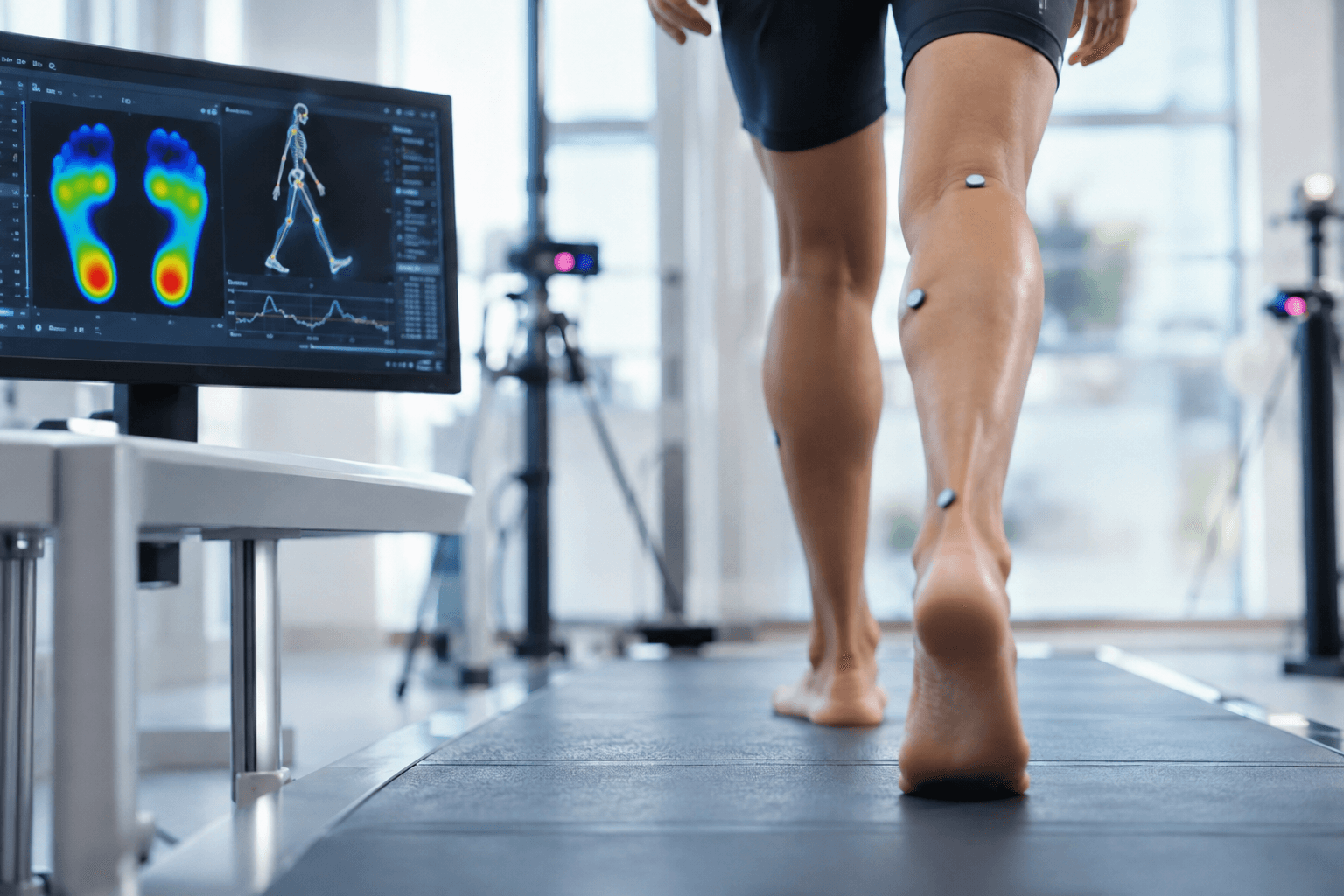
Stroke analysis allows experts to estimate step length, load distribution, foot position, and movement coordination.
Various technologies are used in specialized centers, including sensors, cameras and baropodometric platforms that measure the distribution of pressure under the foot.
The results can help identify movement deviations that are not always easy to detect during a simple examination.
2. What's changing in 2026?
The big news is not the gait analysis itself, which has been used in medicine for decades, but the way data is collected and processed.
Modern wearable sensors make it possible to track movement even outside the laboratory, while artificial intelligence is being explored as a tool for recognizing patterns and changes during rehabilitation.
A scientific review published in January 2026 included 22 studies with a total of 1,040 participants and showed the potential of wearable sensors to monitor athlete biomechanics and post-injury recovery.
However, technology still has limitations. The data obtained must be interpreted in conjunction with the clinical examination.
3. Who can gait analysis help?
This assessment can be particularly useful for recurrent sports injuries, foot problems, rehabilitation after knee surgery, and certain balance and movement disorders.
For example, a person who has had knee surgery may unconsciously continue to put more strain on a healthy leg.
Movement analysis can help the physiotherapist monitor the load and adjust the exercises during recovery.
However, not all asymmetry is a sign of disease. Gait analysis alone cannot reliably determine the cause of each pain or predict all future injuries.
4. Where can gait analysis be done in Croatia?
One of the institutions presented in the Energy Clinic guide is Poliklinika Peharec in Pula.
The polyclinic has a biomechanical and baropodometric laboratory for the analysis of gait, posture and spine.
In addition to biomechanical movement testing, it provides sports rehabilitation, kinesitherapy, spinal rehabilitation and the manufacture of individual orthopedic inserts.
Such an approach makes it possible to link the assessment of the way of movement with an individual rehabilitation plan.
5. Is technology the future of physiotherapy?
Everything indicates that objective measurement of movement will play an increasingly important role in rehabilitation.
Instead of relying solely on a subjective sense of progress, experts can also monitor certain measurable changes in movement.
However, no sensor can replace the experience of a doctor or physiotherapist, a quality examination and a properly designed exercise program.
The future of rehabilitation lies not only in more advanced devices, but in a better understanding of each individual movement.
Not sure what suits you?
Find the right provider for you with our AI tool →