Back pain that returns after a few hours of sitting. Knee that is no longer the same after an injury. Shoulder that limits daily movements. Recovery after surgery that takes longer than expected. These are just some of the situations in which physical therapy and rehabilitation can play an important role.However, rehabilitation is not just about eliminating pain. The disappearance of pain can be an important sign of progress, but it does not necessarily mean that the body is fully prepared to return to all activities.
The goal of quality rehabilitation is to help a person re-establish mobility, strength, stability and function necessary for everyday life, work or sports.
What is physical therapy?
Physical therapy includes various procedures that seek to improve body function, reduce ailments, and aid recovery after injury, illness, or surgery.
Depending on the problem and the expert's assessment, therapy may include therapeutic exercises, manual techniques, mobility work, strength and stability training, patient education, and other methods.
It is important to emphasize that there is no one program that suits everyone.Two people may have pain in the same place, for example in the lower back, but the cause of the problem, functional limitations and their needs may be completely different. That is why rehabilitation usually starts with an individual assessment.
What does the first physical therapist appointment look like?
The first examination often starts with a conversation. The physiotherapist will be interested not only in where you feel the pain, but also when the problem started, what makes it worse or less, whether you have had previous injuries and how the symptoms affect your daily life.
The interview may be followed by a functional assessment.Depending on the problems, the physiotherapist can assess joint mobility, muscle strength, stability, coordination, balance and certain movement patterns.
This is an important part of the process because the place where we feel pain is not always the only area to consider.Based on the examination, the goals of the therapy are determined. For one person, the goal may be to walk again without discomfort, for the second, to return to running, and for the third, to spend the working day without significant problems.
When can physical therapy help?
Physical therapy and rehabilitation are used in a large number of conditions and problems of the musculoskeletal system.Common reasons for visiting a physiotherapist include back and neck pain, shoulder, knee or hip problems, sports injuries, sprains and strains, limited mobility, recovery after a fracture or surgery, and difficulties affecting normal movement and daily functioning.Rehabilitation can be important even after a period of reduced activity. During prolonged rest, there may be a decrease in muscle strength and fitness, which is why returning to the previous level of activity sometimes requires a gradual approach.
Pain is gone – is rehabilitation over?
Not necessarily.
This is one of the most important things to understand in rehabilitation.Pain is a symptom, and reducing it can certainly be a positive sign. However, a person may feel significantly less pain before they fully regain strength, stability, coordination, or the ability to withstand a greater load.
Imagine a person who hurt their ankle. After a while, he can walk normally again without pain. But can he run safely? Change direction abruptly? Jump and land? Endure the whole workout?The answer may not be yes.
That's why successful recovery isn't just judged by asking, “Does it still hurt?” An equally important question is: “Can a person safely do what they need to do again?”
Why is a gradual increase in load important?
One of the basic ideas of rehabilitation is gradualness.After an injury or prolonged period of reduced activity, the body may need time to readjust to the demands of everyday life, work or sports.
Therefore, rehabilitation often progresses from simpler to more complex tasks.For example, a program after a knee injury can begin by restoring range of motion and basic muscle activation. After that, more demanding strength, balance and coordination exercises can be gradually introduced, and later activities that more closely resemble the actual demands of work or sport.
Returning to full load too quickly can be a problem if the body is not yet ready for the level of activity we expect from it.On the other hand, avoiding movement unnecessarily is not always the best solution. For many problems, properly dosed movement is an important part of the recovery process.
That is why an expert assessment can help find the right level of activity for an individual.
Rehabilitation after surgery
Physical therapy is often part of recovery after orthopaedic and other surgical procedures.The rehabilitation program depends on the type of procedure, doctor's recommendations, the patient's condition and the healing phase.
Initially, the focus may be on symptom control, safe movement and the gradual restoration of mobility. Later, the emphasis can be shifted to restoring strength, stability, stamina and functional abilities.It is important to comply with the restrictions and recommendations related to a particular surgery. More exercise does not automatically mean faster recovery.
Rehabilitation is a process in which the load adjusts to the capabilities of the tissue and the patient at a certain stage of recovery.
What about back pain?
Back pain is one of the common reasons people seek help from a physiotherapist.Problems can be related to various factors, including load, reduced physical activity, certain movements, injuries or changes in the function of the musculoskeletal system.
In some people, rest may temporarily reduce symptoms, but prolonged avoidance of activity is not necessarily a solution.A physical therapist can assess how a person is moving, what activities are causing them a problem, and what functional abilities need to be improved. The program can then include custom exercises and a gradual return to activities.Of course, not all back pain is the same. In certain situations, a medical evaluation is also required, especially with new or extremely severe symptoms, after serious trauma, or when neurological or other worrying symptoms are present.
Active patient role
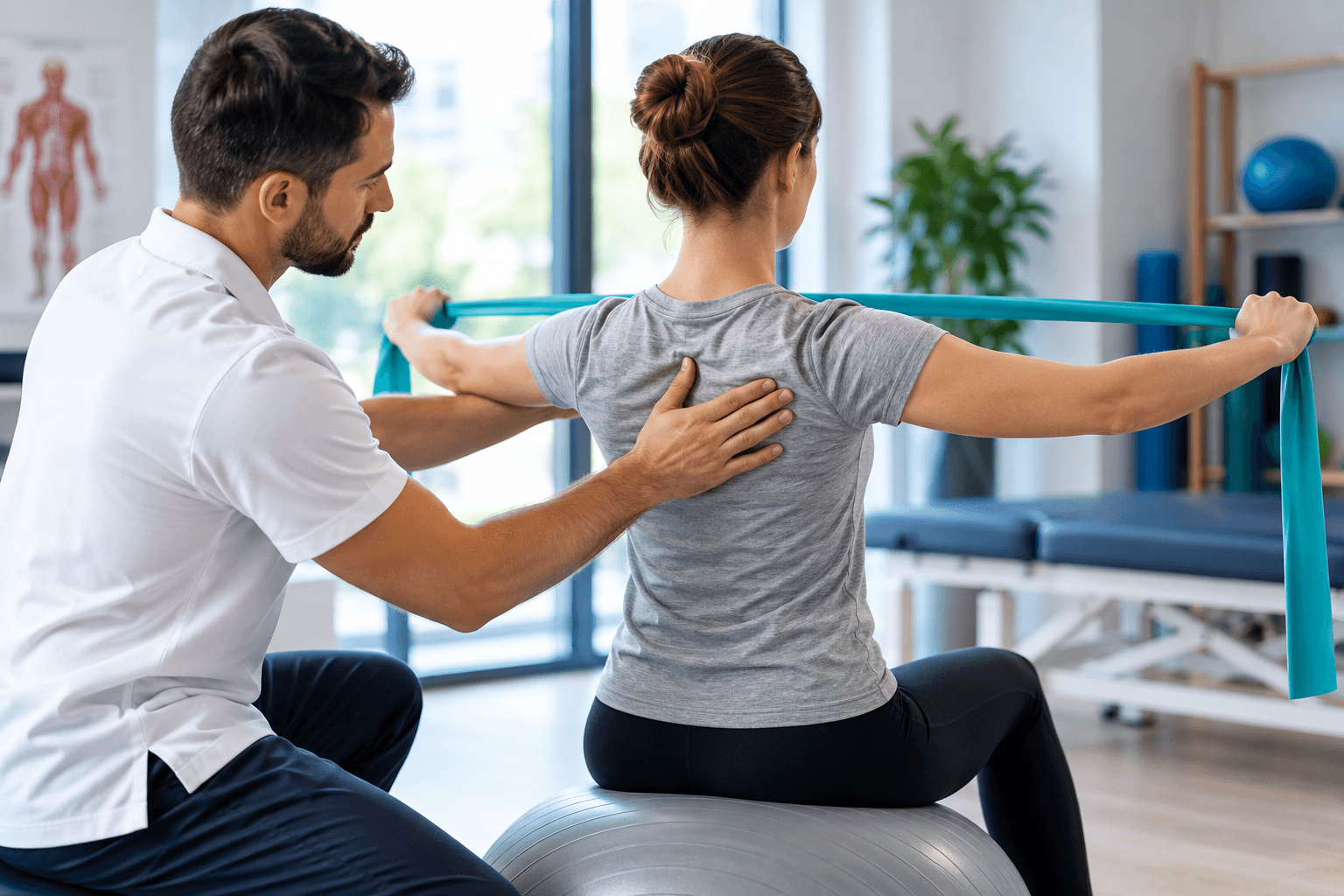
One of the common misconceptions is that rehabilitation means lying on the table while the therapist “fixes” the problem.Certain manual and other therapeutic techniques can be part of the treatment, but the patient often plays a very active role in the process.
This may include regularly performing agreed exercises, adjusting certain activities, monitoring symptoms, and gradually increasing workload.
A physical therapist can guide the process, but much of the progress occurs between appointments.That is why understanding the problem can be just as important as the exercise program itself. When a person knows why they are performing a particular exercise, what they are trying to achieve and how to recognize progress, it is easier to actively participate in rehabilitation.
How long is rehabilitation?
There is no universal answer.The duration of rehabilitation depends on the type and severity of the problem, the duration of symptoms, general health, age, activity level, patient goals and a number of other factors.
A minor problem may require a relatively short period of therapy, while recovery after a serious injury or surgery may take months.
It's important to have realistic expectations.
Progress is also not always completely linear. There may be periods of rapid improvement, but also days when symptoms temporarily intensify.
Therefore, progress should not be judged by just one good or bad day, but by changes in function over time.
How to choose a physiotherapist or rehabilitation center?
A good choice shouldn't just be based on distance or price.It is important to check professional qualifications, area of experience and access to therapy. The physical therapist should take the time to assess the problem, explain the rehabilitation plan and set clear goals together with the patient.
It's especially helpful to find an expert who has experience with the issue you're looking for help with.A person returning to professional sports after a serious injury may have different needs than someone who wants to reduce pain and perform daily activities again without problems.
Good communication is also important. The patient should understand what he is doing, why he is doing it and what to expect during the process.
The goal is not just to live without pain
Rehabilitation is not a race towards the first day without symptoms.
The real goal is function.Can you walk as much as you want again? Can you raise a child, work, train, ride a bike, or get back to an activity that matters to you? Do you have enough strength and security in motion that you can do it without constant fear of re-injury?
It is these questions that give a broader picture of successful recovery.Pain can be the reason why a person enters a physiotherapist's office for the first time. But quality rehabilitation goes a step further: it seeks to help a person rebuild the abilities needed to lead a normal and active life.
If you are recovering from an injury, surgery, or have problems that restrict your movement and daily activities, an expert assessment can be a good first step.On the Energy Clinic platform you can find experts in the field of physical therapy and rehabilitation and choose an expert or institution that suits your needs.