
Wider parting or full brush?
In androgenetic alopecia, the hair becomes thinner and shorter over time. In women, this is often seen as a widening of the parting and thinning on the top of the head. In men, the hairline along the temples recedes more often, or the hair on the crown thins. The change is gradual, so it is sometimes easier to see the difference in photos taken several months apart.
In telogen effluvium, hair falls out more intensely all over the scalp. It can start several months after an illness with a high fever, childbirth, or sudden weight loss. That is why the event that triggered it can easily go unnoticed. Hair loss often gradually subsides, and it may take time for the previous volume to return. Telogen effluvium and androgenetic alopecia can occur simultaneously, so sudden hair loss sometimes draws attention to thinning that began earlier.
When one or more round, smooth, hairless areas appear, a dermatologist may suspect alopecia areata. In this autoimmune condition, hair loss can be sudden, and sometimes it also affects the eyebrows or beard.
What does trichoscopy look like?
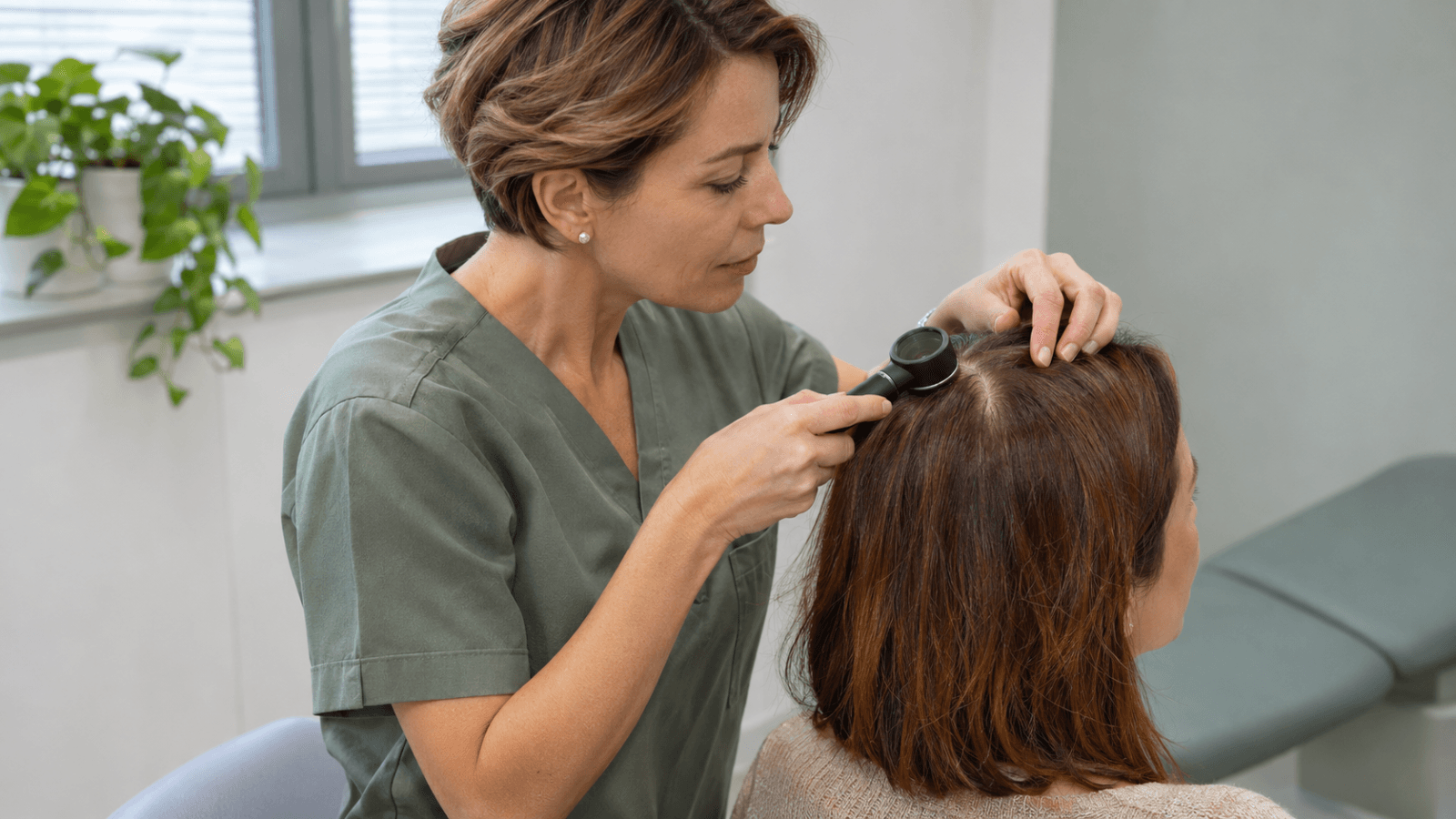
Trichoscopy is a painless examination of the hair and scalp under magnification. The dermatologist observes the thickness of the hair, the openings of the follicles, and the skin around them. For example, if there are more markedly thin hairs on the top of the head than on the back of the head, this finding may indicate androgenetic alopecia. The examination may also reveal redness or flaking around the follicles.
During the examination, the dermatologist will ask you when you first noticed the change, whether your hair started falling out suddenly, and whether you are taking any medications. Depending on the findings, he/she may recommend blood tests, for example, to check for iron deficiency or thyroid dysfunction. If the examination indicates scarring of the scalp or if the cause is still unclear, a biopsy, i.e., an analysis of a small skin sample, is sometimes necessary.
If you have an older photo that clearly shows your hair parting or hairline, bring it with you to the examination.
What happens after the diagnosis?
In the case of transient telogen effluvium, the doctor may recommend monitoring and, if necessary, treatment of the identified cause. In the case of androgenetic alopecia, one option is minoxidil, which is applied to the scalp. It usually takes several months of regular use to assess the effect. If the therapy helps, the effect is generally maintained as long as it is administered.
Hair supplements often contain iron, zinc, or biotin. A dermatologist may recommend them if tests show a deficiency of a particular nutrient. If you are already taking a hair supplement, bring the name or a photo of the label. Biotin in some preparations may affect the results of certain laboratory tests.
When to make an appointment?
If the parting gradually widens, the hair noticeably loses density, or increased hair loss continues, schedule an examination. Contact us sooner if clearly defined hairless areas suddenly appear or if hair loss is accompanied by pain, redness, or pronounced flaking of the scalp.
Where can I have my scalp examined?
In the Energy Clinic Guide, you will find providers who perform hair and scalp examinations in Zagreb and Split.
- Zagreb — digital trichoscopy as part of a dermatological examination of the hair and scalp at Polyclinic SIAI.
- Zagreb — dermatological examination of the scalp in cases of hair loss, itching, or dandruff at Poliklinika Jakić.
- Split — scalp examination and trichoscopy at the IDERM Polyclinic.
Not sure what suits you?
Find the right provider for you with our AI tool →