
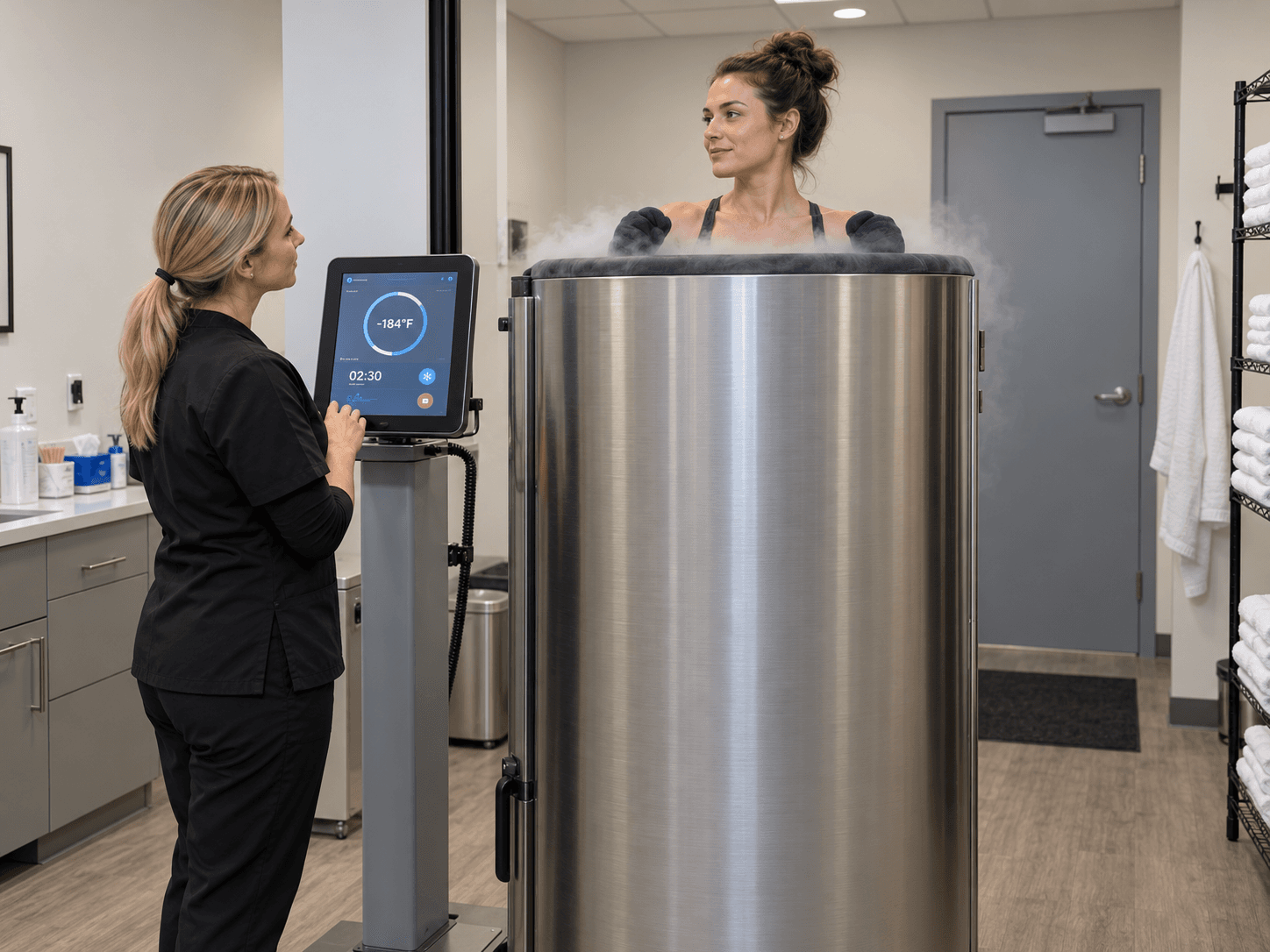
Imagine entering a room where the temperature drops below -100°C. You stay there for two to three minutes, then return to your daily activities. A seemingly simple procedure is now offered in many sports, rehabilitation and wellness centers.
Whole-body cryotherapy attracts attention due to claims that it can accelerate muscle recovery, reduce inflammation, improve mood and increase the feeling of energy.However, there is an important difference between the popularity of the treatment and its proven health benefits.
What exactly is full-body cryotherapy?
Whole body cryotherapy, known as Whole-Body Cryotherapy (WBC), is a procedure of short-term exposure to extremely cold, dry air.It is carried out in specially designed chambers or cabins. Temperatures, depending on the device and protocol, often range between -110°C and -140°C.
Unlike immersion in icy water, the body is exposed to cold air, which transfers heat differently from water.
During the treatment, there is rapid cooling of the skin surface, narrowing of the superficial blood vessels and activation of physiological responses to cold. The body tries to maintain a stable internal temperature, and these answers are the subject of scientific research.
Why is the treatment so popular among athletes?
One of the main reasons for the popularity of cryotherapy is related to recovery after intense physical activity. Athletes use it in an effort to reduce the feeling of muscle fatigue and soreness after training or competition.
Cold can temporarily reduce the sensation of pain, which is why cryotherapy is often presented as a method of accelerated recovery. However, the subjective sense of relief is not necessarily evidence that muscle tissue recovers faster.
For the time being, the scientific literature does not provide sufficiently consistent results that full-body cryotherapy could be recommended as a universal method of sports recovery.
What does recent research say?
In March 2025, the journal Scientific Reports published a meta-analysis that included 11 randomized controlled trials. Scientists analyzed the impact of whole-body cryotherapy on indicators of the inflammatory response of the body. The results showed that cryotherapy can affect certain inflammatory biomarkers, which opens up opportunities for further research.
However, changing laboratory indicators does not automatically mean that the treatment cures diseases, prevents injuries or brings long-term health improvement. An earlier Cochrane review also warned that the available evidence was insufficient to reliably confirm the effect of cryotherapy on muscle soreness after exercise.
Scientific interest exists, but many questions about the actual clinical benefit remain open.
Can cryotherapy affect stress and mood?
In addition to sports recovery, cryotherapy is increasingly associated with mental well-being. Exposure to intense cold is a powerful physiological stimulus that activates the nervous system.
Some users describe increased alertness, a feeling of freshness, or improved mood after treatment. Researchers are studying possible effects on psychological state, sleep and stress regulation.
However, the evidence is not yet strong enough to consider cryotherapy as standard therapy for depression, anxiety, or sleep disorders. A temporary sense of comfort should not be equated with a long-term therapeutic effect.
What does one treatment look like?
Before entering the chamber, the user receives protective equipment, most often gloves, socks and appropriate footwear. The skin must be dry, and the treatment is carried out according to the protocol of each device.
Staying in a cool space usually takes between two and four minutes. During the procedure, the staff must accompany the user and have the possibility of immediately stopping the treatment.
Upon exit, the body gradually returns to normal temperature conditions. Despite its short duration, it is an intense exposure to cold that is not suitable for everyone.
Are there risks?
Yes. Extreme cold can cause frostbite, skin damage and other adverse reactions.
Particular caution should be exercised in people with certain cardiovascular diseases, circulatory disorders or hypersensitivity to cold. Appliances using liquid nitrogen also run the risk of lack of oxygen in the space if the equipment is not used properly.
The US FDA has not approved full-body cryotherapy as a safe and effective method of treating any medical condition. Therefore, expert assessment, quality equipment and appropriate safety procedures are crucial.
The future of medical wellness isn't just about new devices
Cryotherapy shows how fast the medical wellness market is developing.Technologies that were once associated primarily with sports recovery are now offered to a much wider audience. But quality medical wellness should not be based on the extremes of treatment or the impressiveness of technology.
True value lies in expertise, individual approach and proven results. Before choosing any treatment, it is important to understand its possibilities, limitations and potential risks.Explore health and wellness centers and experts at Energy Clinic to find the approach that best suits your needs.
Sources: