Creams, serums and classic cosmetic treatments can improve the appearance of the skin, but certain changes, such as deep acne scars, pronounced wrinkles or damage caused by prolonged sun exposure, require a more intensive approach.
That is why CO₂ laser, a technology that has been used in dermatology for decades, is again attracting great attention.Although it is not a completely new method, modern fractional laser systems allow for more precise treatment of the skin and individual adjustment of the intensity of the procedure.
Their goal is not only to improve the surface appearance, but to stimulate the natural processes of skin renewal and collagen formation.
What can the CO₂ laser really achieve and to whom is it intended?
1. What is a CO₂ laser and how does it work?
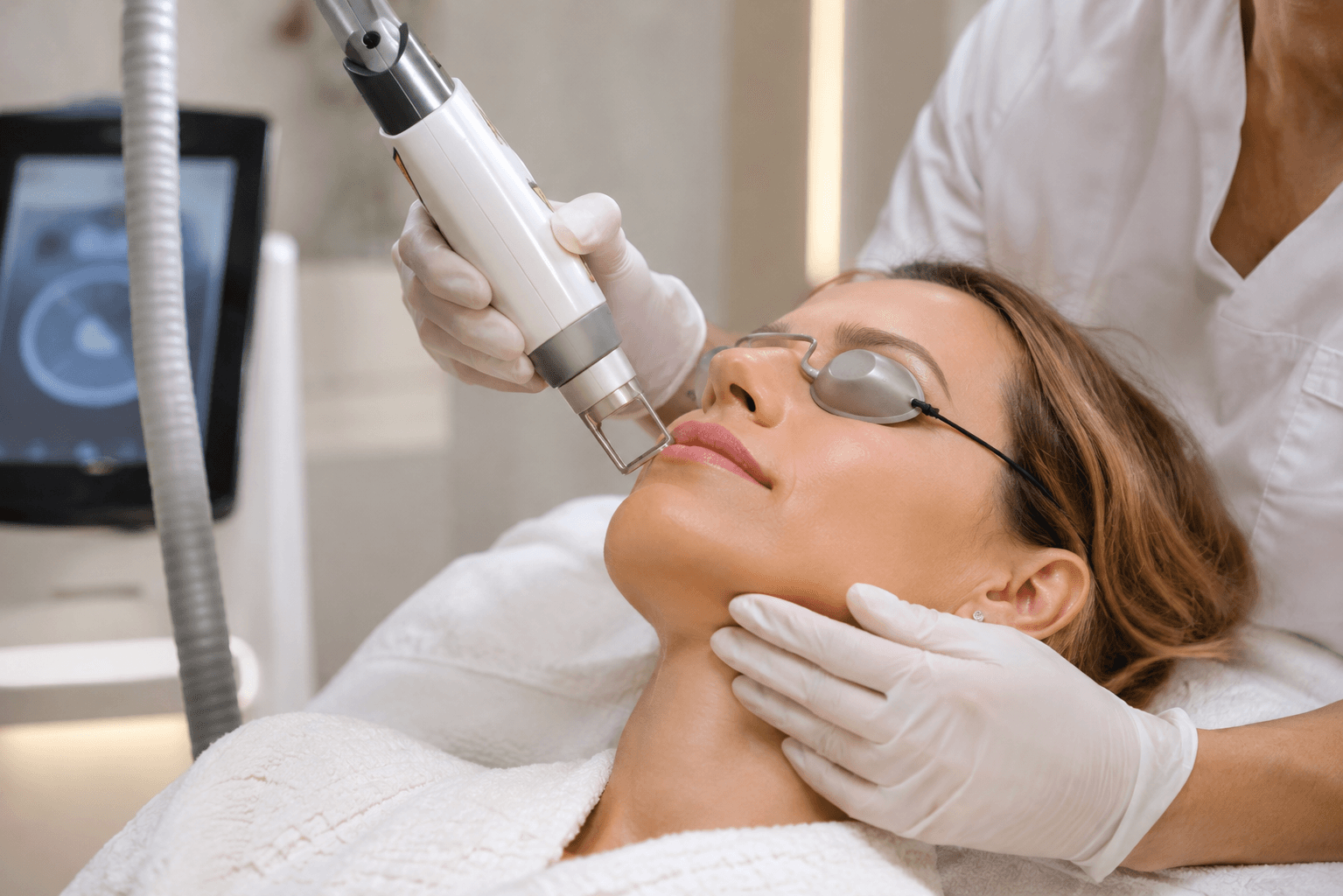
The CO₂ laser is a medical device that uses laser light with a wavelength of 10,600 nanometers. This energy is strongly absorbed in the water present in the skin tissue, which allows for the precise removal of certain layers of skin.In a fractional CO₂ laser, energy is distributed in a multitude of microscopic treated zones, between which parts of intact tissue remain.
Such an approach enables the restoration of the skin surface, while stimulating the collagen remodeling process in the deeper layers.The result can be a smoother texture, reduced visibility of scars and wrinkles, and a more even appearance of the skin. Unlike certain gentler laser treatments that do not remove the surface layer of the skin, the CO₂ laser belongs to the group of ablative lasers.
Therefore, it can achieve more pronounced results in certain irregularities, but it also requires a more serious approach to recovery.
2. What skin problems can it treat?
One of the most important applications of the fractional CO₂ laser is to reduce the visibility of atrophic scars resulting from acne. Such scars often look like small dents, and are caused by changes in the structure of collagen during healing. The laser can stimulate tissue remodeling and gradually reduce their expression.
However, not all scars respond equally. Deep and narrow scars sometimes require a combination of laser with other dermatological procedures.
CO₂ laser can relieve certain wrinkles, especially around the eyes and lips. At the same time, it can improve the appearance of skin damaged by long-term exposure to UV radiation.It is important to know that the laser does not stop natural aging nor can it replace surgical facial tightening when there is significant excess skin.
Uneven texture and pigmentation irregularities. Fractional CO₂ laser can improve skin roughness, certain surface irregularities and some signs of sun damage.
However, it is not suitable for all types of pigmentation. For example, with melasma, there is a risk of worsening pigmentation, so a dermatologist may recommend a different approach.
The CO₂ laser is also used to remove certain warts, fibromas and other benign skin lesions.Before the procedure, it is necessary to determine what kind of change it is. Suspicious pigmented changes should not be removed solely for aesthetic reasons without proper dermatological evaluation.
3. What does the treatment look like?
Before the procedure, an examination of the skin is performed, during which the doctor assesses the indication, medical history, previous therapies and expected results.Anesthetic cream is most often applied to the treatment area, and additional methods of anesthesia can be used for more intensive procedures. The treatment itself usually lasts between 15 and 60 minutes, depending on the surface area and the intensity of the procedure.
During the procedure, you may feel warmth and uncomfortable tingling. After the treatment, the skin is often red, sensitive and swollen, similar to a severe sunburn. Therefore, it is important to plan your recovery time in advance.
4. How long does it take to recover after a CO₂ laser?
Recovery is one of the most important factors when choosing this treatment. During the first two to three days, more pronounced redness, a feeling of warmth and swelling are possible. In the following days, the skin may darken, form small scabs and begin to peel.For more intensive treatments, surface healing usually takes about seven to fourteen days. However, redness and tenderness can last significantly longer, sometimes for several weeks or months.
The process of collagen formation and remodeling continues over the coming months, which is why the final results are not immediately visible. After the treatment, proper skin care, avoiding direct sunlight and following the doctor's instructions are crucial.That is why autumn and winter are often a practical period for planning such interventions, when it is easier to limit exposure to strong solar radiation.
5. Are there risks?
Although CO₂ laser can provide significant improvements, it is a medical procedure that is not risk-free. Possible complications include prolonged redness, infections, herpes activation, pigmentation changes and, less commonly, scarring.People with darker skin phototypes have an increased risk of procedural hyperpigmentation and other pigmentation changes. Particular caution should also be exercised in people prone to keloid scars or with certain active skin diseases.
Therefore, it is important that the treatment is carried out by an appropriately trained medical professional, with a prior skin assessment.
6. Where to do CO₂ laser treatment in Croatia?
CO₂ laser treatments are also available in Croatia, including several Zagreb polyclinics that offer modern dermatological and aesthetic procedures.
Among the institutions that offer CO₂ laser there are the following four clinics:
Matić Polyclinic – Zagreb
Matić Polyclinic offers CO₂ laser treatments to rejuvenate the skin, relieve wrinkles, acne scars, certain pigmentations and remove selected skin changes.
According to the polyclinic, the procedure usually takes between 15 and 60 minutes, and recovery usually requires one to two weeks. The treatment is planned after an individual assessment conducted by Dr. Stipo Matić, specialist in plastic, reconstructive and aesthetic surgery.
SIAI Polyclinic – Zagreb
In its laser center, the SIAI Polyclinic uses the fractional CO₂ laser Lutronic eCO2 for skin resurfacing, treatment of scars, wrinkles and certain other irregularities.
The treatments are carried out under the dermatological supervision of doc. dr. sc. Ivana Prkačin, specialist in dermatology and venereology.The polyclinic particularly emphasizes the importance of proper recovery, which usually takes seven to fourteen days, while the results of collagen remodeling can develop over three to six months.
Lohuis Filipović Medical Group – Zagreb
The Lohuis Filipović Medical Group Polyclinic has a specialized laser center that includes a Candela CO₂ fractional laser.The institution states the application of this technology to restore and tighten the skin, reduce the visibility of wrinkles, scars, stretch marks and certain pigmentation changes.
A distinctive feature of the Candela CO₂ system is the ability to adapt different modes to the needs of the patient and the area being treated. The number of treatments depends on the type and severity of the changes. Scars and more complex irregularities may require a number of procedures.
DEA Clinic – Zagreb
DEA Clinic also offers CO₂ laser treatments as part of its dermatological and aesthetic offer.
According to the clinic, the treatment is used to improve the texture of the skin, reduce the visibility of wrinkles, acne scars and certain signs of sun damage.In the clinic, the approach is adapted to the individual condition of the skin, the severity of the changes and the expected results. CO₂ laser is part of a wider range of dermatological technologies, which makes it possible to consider different procedures according to a specific indication.
7. Is CO₂ laser better than other rejuvenating treatments?
CO₂ laser is often compared to microneedling, chemical peels, radio frequency treatments and non-ablative lasers. Its main advantage is the possibility of more intensive skin renewal, especially with more pronounced scars and wrinkles.However, a stronger treatment does not automatically mean a better choice. People with mild imperfections, more sensitive skin, or limited recovery time may prefer less intensive procedures.
Sometimes the best results are achieved through a combination of different methods, for example in complex acne scars. The choice depends on the type of changes, skin phototype, expectations and acceptable risk.
Conclusion: Is it worth trying a CO₂ laser?
CO₂ laser is one of the important procedures of modern cosmetic dermatology, especially when the goal is to relieve acne scars, reduce certain wrinkles or improve the texture of the skin.
Modern fractional technology allows precise operation and adjustment of the treatment, but does not eliminate the need for careful preparation and recovery. The most important thing is to choose the right treatment for your own skin, not the most intense or popular procedure.
On the [Energy Clinic] platform (https://www.energyclinic.com/hr), explore dermatological and aesthetic institutions in Croatia, get to know the available treatments and find experts who can help you choose.
Not sure what suits you?
Find the right provider for you with our AI tool →