
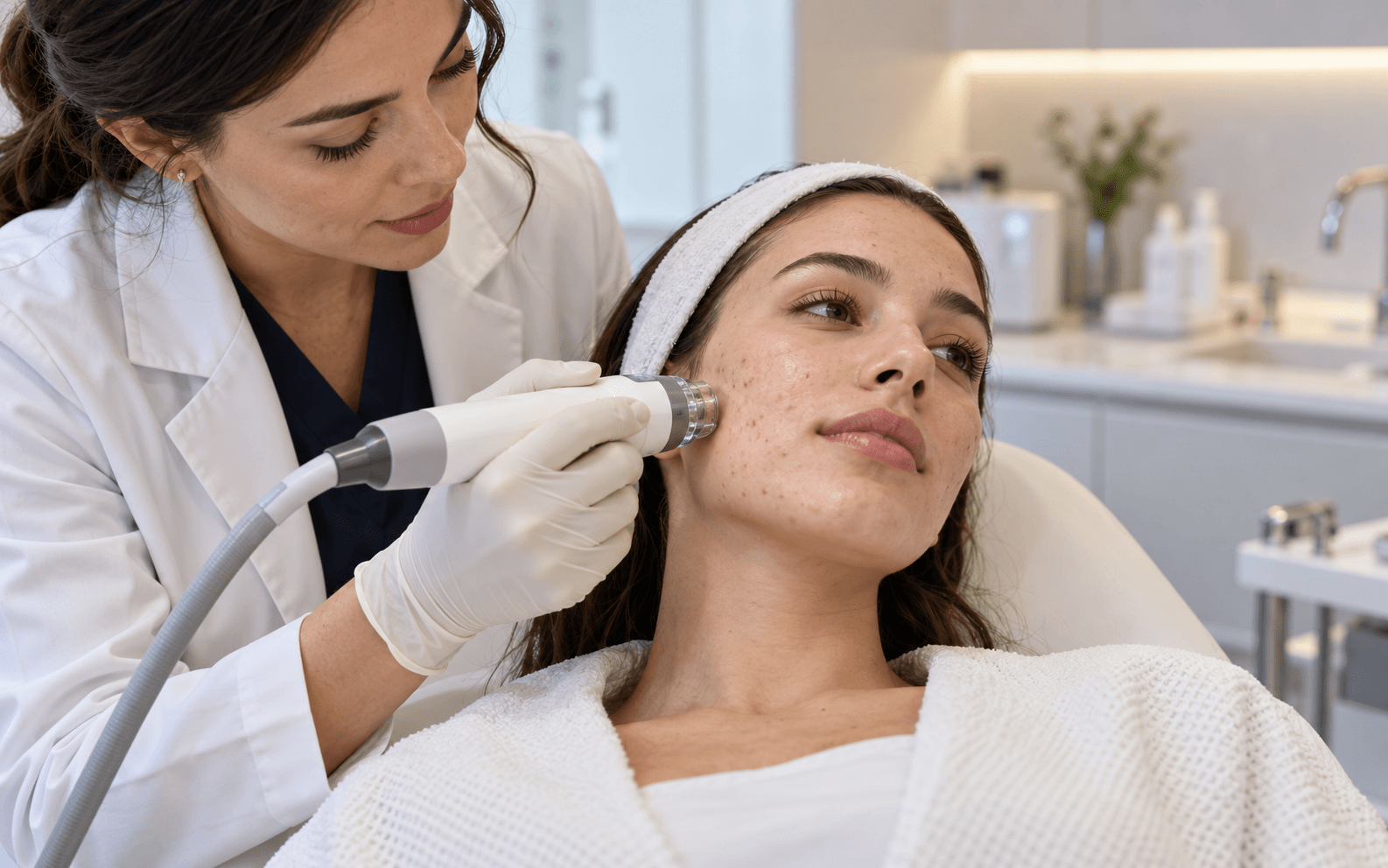
Acne is not just a teenage skin problem. They can occur or continue into adulthood, especially in women, and their influence often goes beyond physical appearance.
The good news is that dermatology is making progress. New medicines, laser technologies and personalized treatment approaches open up opportunities for people for whom traditional treatments have not brought the expected results.
What are the most interesting innovations in acne treatment in 2026?
1. AviClear – laser that acts on the cause of acne
One of the most interesting innovations in recent years is AviClear, a laser system that uses a wavelength of 1726 nm.
Unlike treatments that primarily affect the surface of the skin, this laser specifically heats the sebaceous glands, reducing their activity and thus influencing one of the main factors in the formation of acne. The treatment is usually carried out through three sessions, with a few weeks apart.
A survey published in 2026 showed that among the 71 participants who completed a one-year follow-up, 91.5% achieved at least a 50% reduction in the number of inflammatory changes.
The results are promising, but the study did not include a control group, so additional independent studies are needed. Who is it interesting for? Primarily for people with moderate to severe inflammatory acne who wish to consider treatments without daily medication.
Availability and price vary by country and dermatological facility.
**2. Clacoterone – a new generation of hormonal acne creams **
Hormones play an important role in acne because androgens can stimulate sebum production. Clascoterone is a topical antiandrogen that acts on androgen receptors in the skin, which can help reduce acne.
Its peculiarity is the targeted local action, unlike hormone therapies that affect the whole body.
In the European Union, the drug Winlevi, which contains clacoterone, was approved in October 2025 for the treatment of acne in adults and acne on the face in adolescents from 12 years. However, approval does not mean automatic availability in all countries and pharmacies.
Who is it interesting for? For certain people with inflammatory acne, including those in whom hormonal factors play a significant role.
3. Tripharotene – a more precise approach to retinoids
Retinoids have been one of the cornerstones of dermatological acne treatment for decades.Trifarotene is a newer topical retinoid that selectively acts on certain retinoic acid receptors in the skin.
It is used to treat acne on the face and torso, which makes it particularly interesting for people who have acne on the back, shoulders and chest.
It helps regulate the process of skin cell renewal and reduce the formation of clogged pores. Like other retinoids, it can cause dryness and irritation, especially at the beginning of treatment. Not suitable during pregnancy.
Its selectivity does not necessarily mean that it is more effective or gentle than all older retinoids.
**4. Hormonal therapy – an increasingly important approach to adult women's acne **
For women who have long-term acne, especially if it worsens during the menstrual cycle, dermatologists may consider hormone therapies. Spironolactone is one of the drugs that are increasingly being considered in certain cases.
It acts on the effects of androgen hormones and can reduce the occurrence of inflammatory changes.
Updated European guidelines from 2026 recognize spironolactone as a therapeutic option for certain forms of acne in women, with individual assessment and medical supervision. It is not suitable for everyone, and its use in the treatment of acne in some countries is outside the officially approved indication.
5. Are classic treatments still important?
Absolutely.
Despite new technologies, benzoyl peroxide, azelaic acid, topical retinoids and certain drug combinations remain an important part of treatment.In severe forms of acne, especially when there is a risk of permanent scarring, oral isotretinoin remains one of the most effective therapeutic options.
It requires medical monitoring and strict pregnancy prevention measures due to the risk of serious birth defects.
A novelty in dermatology is not always the best choice. The success of the treatment depends on the type of acne, their severity, previous therapies and individual skin characteristics.
The future of acne treatment is personalized
Modern dermatology is gradually moving away from an approach in which all patients receive the same products and treatments.
The goal is to identify the dominant factors of acne and choose the combination of procedures that provides the best results with the least risk of side effects.Laser technologies such as AviClear and new drugs such as clacoterone expand treatment options, but do not replace expert dermatological assessment.
Acne that lasts a long time, leaves scars or significantly affects the quality of life deserves timely professional help.
Explore dermatology experts and institutions on the Energy Clinic platform and learn about modern skin care and treatment options.