Breast cancer does not necessarily cause pain or visible changes. That is why early detection can make a big difference. In Croatia, mammography screening is once again in the spotlight in 2026, while new research is examining whether artificial intelligence can help radiologists detect changes that are difficult to recognize.
1. What is 3D mammography?
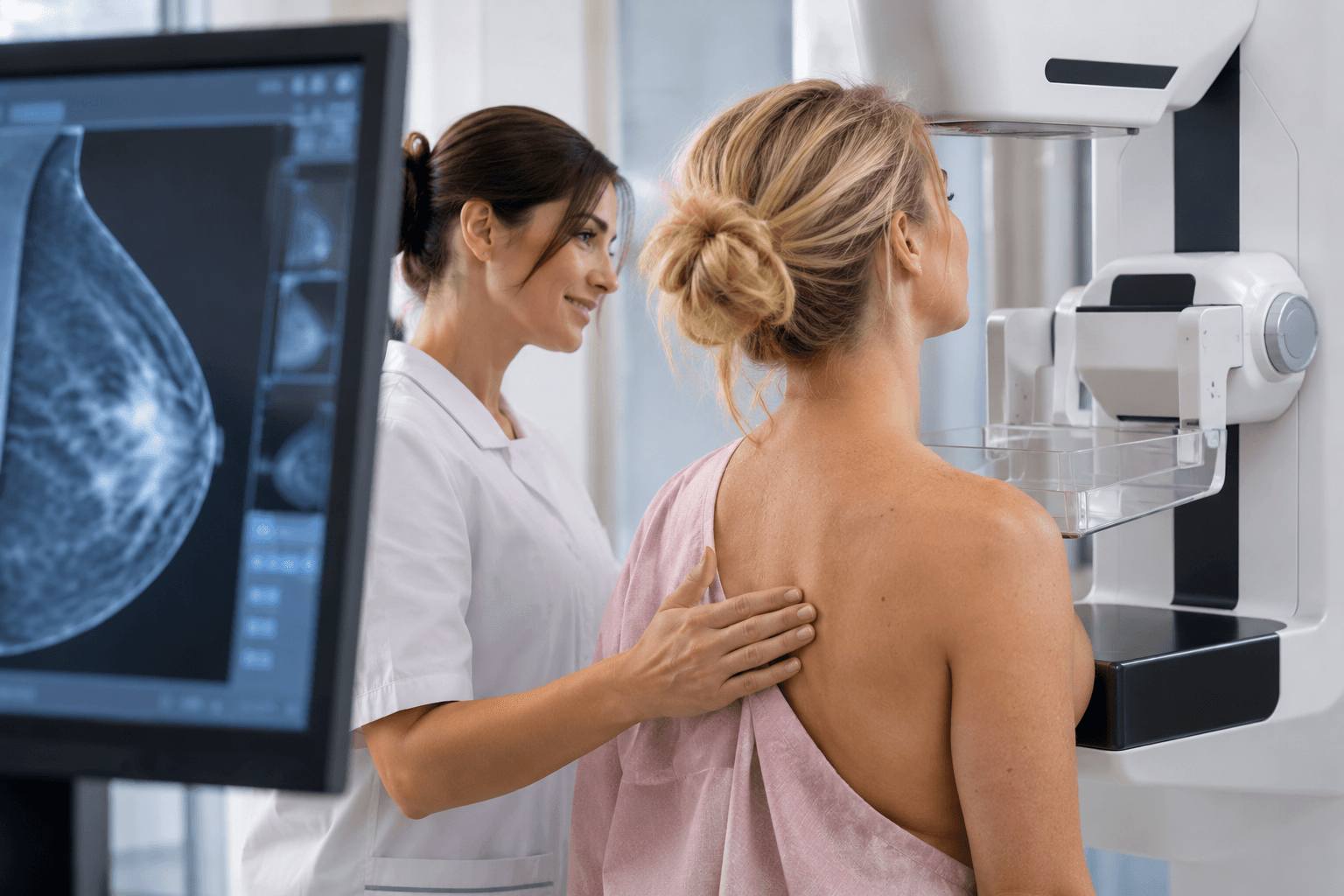
Conventional digital mammography shows the breast in two-dimensional images. Tomosynthesis, known as 3D mammography, creates a series of images from different angles that allow for a layered view of the tissue.
This can help when breast structures overlap, especially in denser tissue. Breast density is one of the reasons why some changes are more difficult to distinguish from the surrounding tissue on a conventional image.
However, even 3D mammography does not detect every tumor. It uses a low dose of X-rays, and the need for additional ultrasound or MRI is determined based on the individual findings.
2. What's new with artificial intelligence?
A study published in Nature Medicine in March 2026 included more than 31,000 women. Compared to standard readings, the AI-assisted approach detected 7.3 cancers per 1,000 screenings instead of 6.3.
At the same time, it increased the number of referrals for further processing. This is an important reminder that a more sensitive analysis is not only beneficial: it can also cause unnecessary concern.
Another large study, published in The Lancet in 2026, showed higher sensitivity of screening with AI support than with standard double reading. However, experts are still studying the long-term impact on women's health.
AI is not the same as 3D mammography. The first is computer-assisted analysis, and the second is the imaging method. The availability of tomosynthesis does not automatically mean that the facility uses AI for reading.
3. When is it time for a screening?
According to the Croatian Institute of Public Health, the national program in the current cycle covers women aged 49 to 70, who are invited for a free mammogram every two years.
Women with an increased risk, a family history, or symptoms need an individual screening plan, regardless of the date of regular screening. If a new lump, nipple discharge, or skin change occurs, you should see a doctor.
It is also important to understand the findings: a request for additional imaging does not automatically mean that cancer has been detected. Sometimes a targeted mammogram, ultrasound, or biopsy is needed to clarify the change.
4. Where can screenings be performed in Croatia?
The Energy Clinic guide lists several institutions offering mammography diagnostics:
Affidea Sveti Rok, Zagreb – mammography and 3D tomosynthesis.
Drinković Polyclinic, Zagreb – digital mammography with 3D tomosynthesis.
Medico Special Hospital, Rijeka – mammography with tomosynthesis.
Polyclinic Slavonija, Osijek – mammography with tomosynthesis.
Croatia Polyclinic, Zadar – mammography and breast ultrasound.
Before making an appointment, check the type of examination available, the conditions for the examination, and the possibility of using a referral. The listed services do not imply that the institutions use AI to analyze the images.
5. Does more advanced technology mean a better examination?
Not necessarily for everyone. The choice of screening is influenced by age, breast structure, previous findings, family history, and the doctor's assessment. Ultrasound is often an important complementary method, but it does not automatically replace mammography.
Conclusion: More advanced devices and artificial intelligence can help detect breast cancer earlier. However, the greatest value of technology exists only when it is combined with timely screening and expert interpretation of the findings.
Not sure what suits you?
Find the right provider for you with our AI tool →